New SEI Study Highlights Potential of Treated Wastewater Reuse for Irrigation in Moldova
.jpg)
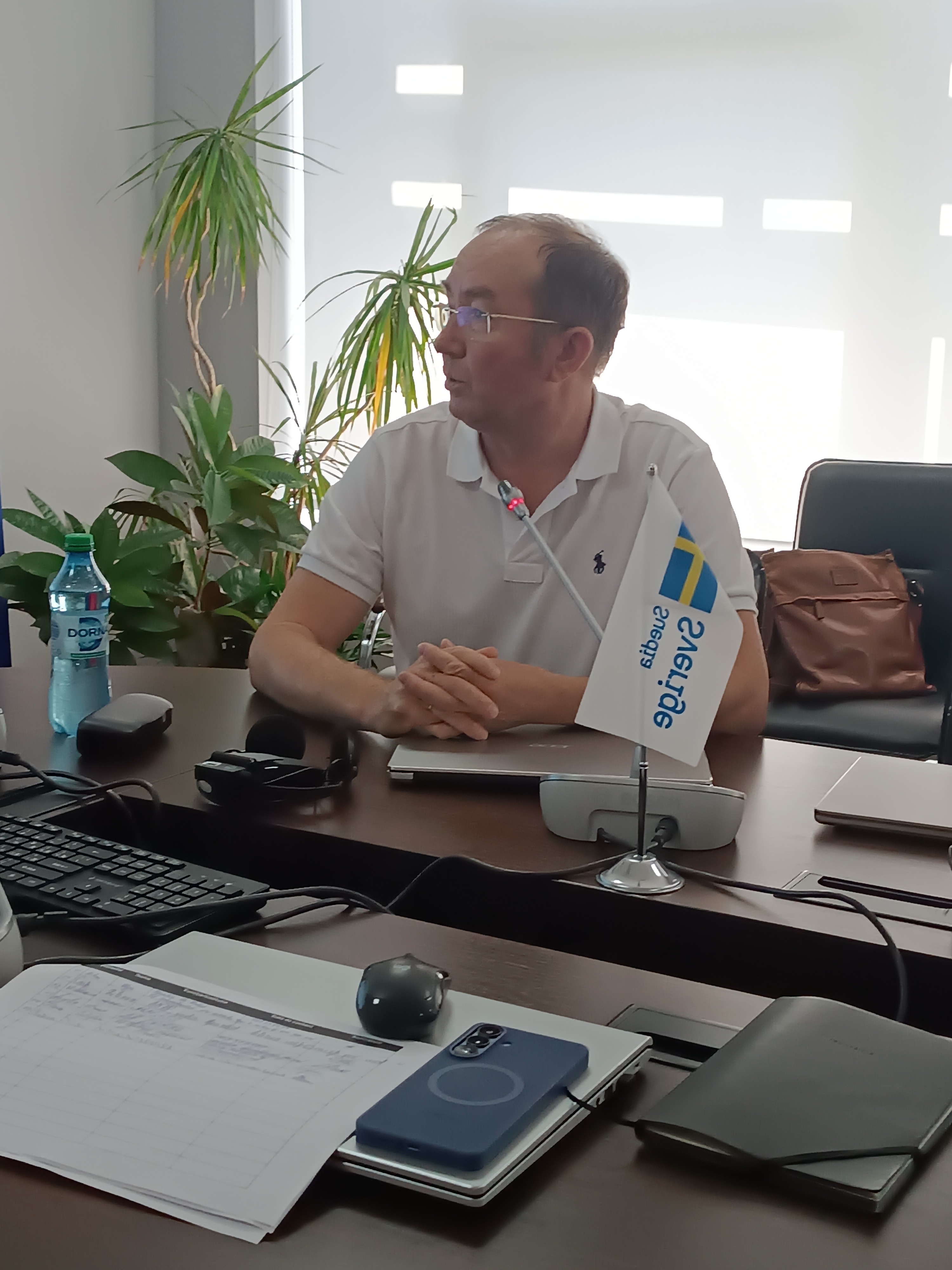
Chisinau, 30 June - The Ministry of Environment of the Republic of Moldova, together with the Stockholm Environment Institute (SEI), has presented a draft Regulation establishing minimum requirements for water reuse. The Regulation builds on the findings and recommendations of an SEI climate adaptation study on the safe reuse of treated wastewater for irrigation in the pilot zones of Căușeni, Cantemir and Cahul.
The discussion brought together representatives of the Ministry of Environment, the Ministry of Agriculture and Food Industry, the Ministry of Infrastructure and Regional Development, the National Agency for Land improvements, the National Public Health Agency, the National Food Safety Agency, the Environmental Protection inspectorate, and the Environmental Agency.
The study was developed in collaboration with the Ministry of Environment as part of the SEI’s Green Agenda for Armenia, Moldova, and Ukraine project, funded by the Swedish International Development Cooperation Agency (Sida). It supports Moldova’s efforts to align national legislation with EU standards, strengthen climate resilience and promote a circular economy.
The draft framework transposes Regulation (EU) 2020/741 on minimum requirements for water reuse and supports Moldova’s wider efforts to align national legislation with EU standards, strengthen climate resilience and promote a circular economy.
“Meeting these water-quality standards is achievable in Moldova”, said Arno Rosemarin, Senior Research Fellow, Stockholm Environment Institute. “This is a major step forward to build climate adaptation into investments in modern wastewater treatment, water storage and efficient irrigation systems. The EU’s recent steps to encourage water and nutrient reuse create a major opportunity for Moldova.”
Supporting farmers in a changing climate
Moldova is increasingly affected by drought, heat and water scarcity. Reusing properly treated wastewater for irrigation can provide farmers with an additional and more reliable water source, while reducing pressure on rivers, lakes and groundwater during dry periods.
The study conducted by SEI found that treated wastewater reuse could become an important climate adaptation measure for Moldova, particularly in southern regions where water scarcity is most severe.
Key findings include:
Treated wastewater reuse can support agricultural production during periods of drought.
Reuse can reduce demand for freshwater abstraction from natural water bodies.
Treated wastewater reuse could increase the irrigated area in Cahul, Căușeni and Cantemir by approximately 40%, adding about 1,817 ha to the current 4,512 ha of irrigated land.
With proper treatment, storage, monitoring and risk management, reclaimed water can be used safely for irrigation.
Cost-benefit analysis indicates that reuse systems can provide long-term economic benefits in suitable locations.
Further hydrological assessments are needed to determine how much water can be reused while maintaining sufficient flows in rivers and ecosystems.
Focus on Căușeni, Cantemir and Cahul
The study focused on wastewater treatment plants and irrigation needs in Căușeni, Cantemir and Cahul, areas that face significant drought and water scarcity risks.
Căușeni and Cantemir are among the facilities in Moldova that already provide advanced biological treatment in line with national requirements. Cahul’s wastewater treatment plant is undergoing major rehabilitation and expansion as part of an infrastructure project to improve sanitation services for roughly 40,000 people in the region.
The combination of available treated wastewater, agricultural water demand and climate vulnerability makes these areas strong candidates for future pilot investments in treated wastewater reuse for irrigation.
Safety rules and EU standards
To ensure that treated wastewater can be reused safely, the draft framework sets requirements for water quality, monitoring, risk management and the operation of reuse systems. It is based on four core elements:
Water quality standards: Treated wastewater must meet microbiological and chemical safety requirements before being used for irrigation.
Storage infrastructure: Storage basins may be needed to make reclaimed water available during peak irrigation periods.
Clear management responsibilities: Water User Associations and relevant authorities will play key roles in managing distribution and ensuring safe use.
Continuous monitoring: Water quality will be tested regularly. If safety standards are not met, the water can’t be used for irrigation.
The proposed framework is included in the National Program for the Accession of the Republic of Moldova to the European Union for 2025-2029. Its alignment with EU standards can also help Moldova access funding opportunities for modernizing wastewater treatment and irrigation infrastructure.
Learning from European experience
The proposed approach draws on experience from European countries including Italy, Spain, Malta, Cyprus and Portugal. As part of the SEI-supported process, Moldovan representatives visited the Apulia region in Italy, where treated wastewater has been reused for irrigation for decades.
Lessons from this experience informed recommendations on disinfection, storage basins and efficient drip irrigation systems that reduce water losses and support safe agricultural use.
Public consultation
The draft Government Decision on the Regulation on minimum requirements for water reuse is now open for public consultation until 9 July 2026 on the Government platform particip.gov.md.
The Ministry of Environment invites farmers, Water User Associations, civil society organizations, local authorities, businesses and members of the public to submit feedback. Their input will help finalize a modern legal framework that supports agricultural resilience, protects public health and safeguards Moldova’s water resources.
The public consultation and endorsement procedures are being carried out in accordance with Law No. 239/2008 on Transparency in the Decision-Making Process.
.jpg)
.jpg)
.jpg)