Stockholm Environment Institute’s Green Agenda Helps Ukrainian Experts Assess Options for Cutting Emissions

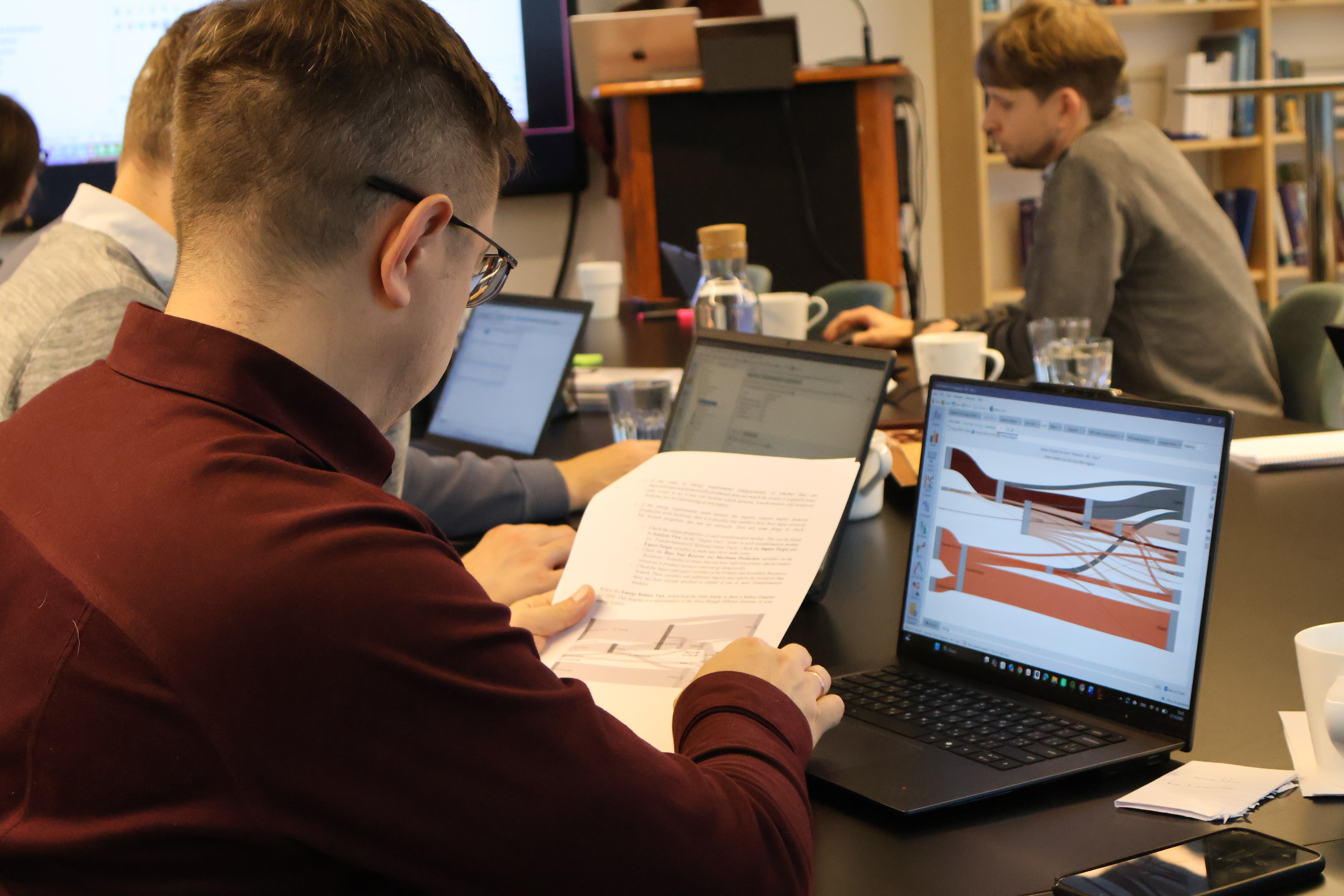
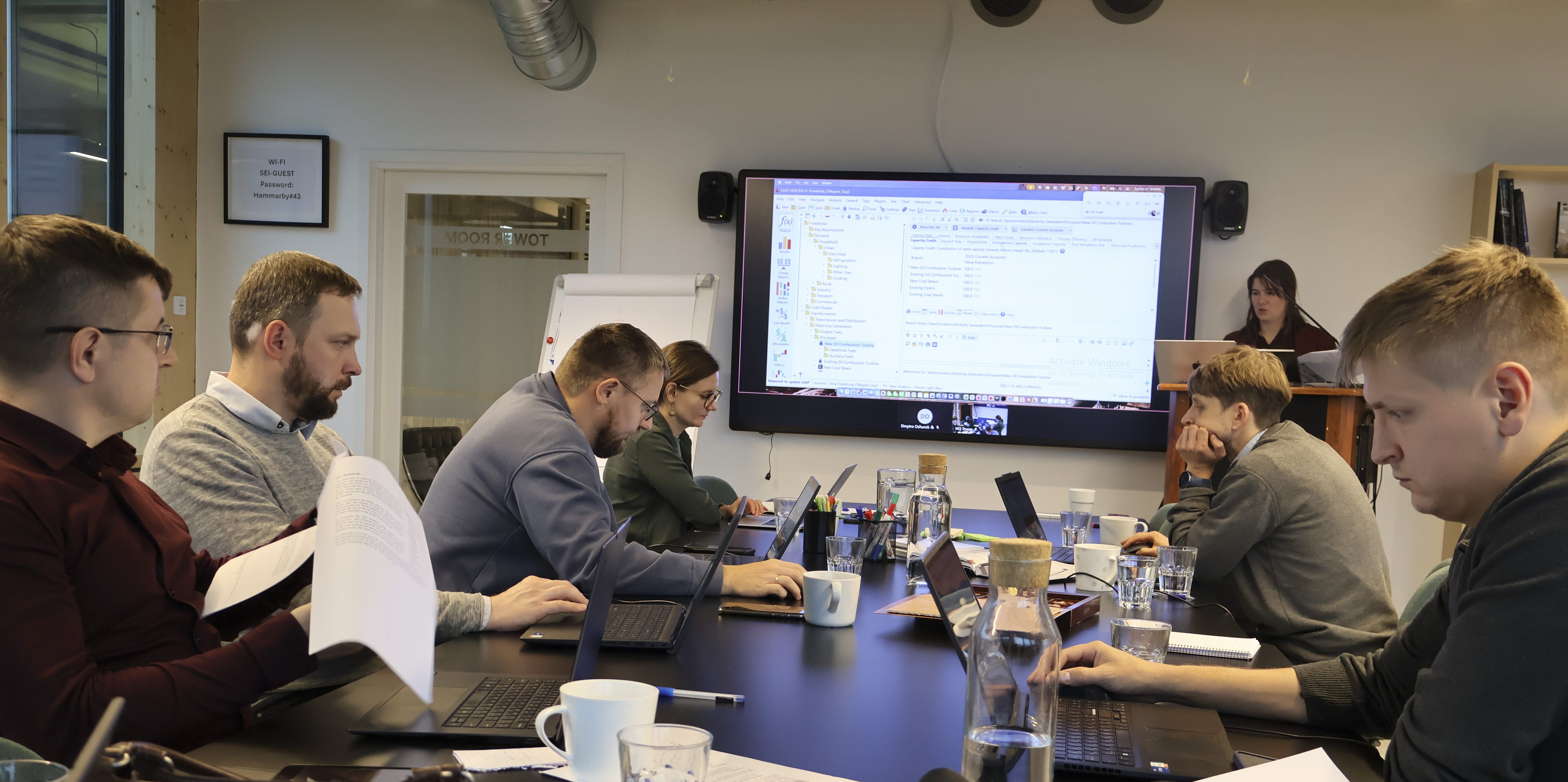
Organised by the Stockholm Environment Institute (SEI) on 26-29 October 2026, the training helped GTO experts gain practical experience with LEAP, an SEI-developed tool. Participants used it to model energy systems, compare the impacts and costs of different policy and technology choices, and identify cost-effective ways to meet energy needs while reducing emissions.
“Through our collaboration with the Green Transition Office, we are laying the groundwork for an integrated assessment of Ukraine’s post-war recovery and green transition. We are developing modeling tools to explore different pathways and help decision-makers understand the trade-offs between investment costs, energy security, resilience, and greenhouse gas emissions. It was great to work closely with the Ukrainian team in Stockholm, advancing the application of these tools across energy, industry, agriculture, and land use, even amid the difficult circumstances of the ongoing war,” said Charlotte Wagner, Senior Scientist at SEI US.
The training programme combined practical exercises, technical presentations and joint work on the ongoing development of a LEAP modelling toolkit for exploring Ukraine’s energy system pathways and decarbonisation scenarios. Participants worked on modelling energy demand and supply, discussed technical challenges, and explored how different datasets can be incorporated into the analysis and affect the modelling results.
The programme also covered sector-specific emissions modelling, including emissions outside the energy sector. Sessions explored approaches to modelling emissions from iron and steel production, estimating non-energy emissions from agriculture, and modelling the land use, land-use change and forestry (LULUCF) sector.
The training forms part of the ongoing cooperation between SEI and the GTO under the Green Agenda for Armenia, Moldova and Ukraine project, funded by the Swedish International Development Cooperation Agency (Sida). In Ukraine, the project supports the development of decarbonisation pathways for key sectors of the economy, helping to build an analytical foundation for the country’s green transition.
“Ukraine needs to translate its climate targets into concrete policies, measures and investment projects that support post-war economic recovery. Given limited resources and competing priorities, identifying the most cost-effective decarbonisation measures and pathways across different sectors is essential. The Low Emissions Analysis Platform provides a powerful tool for modelling decarbonisation pathways and assessing alternative scenarios. The knowledge and skills gained through this training will strengthen our modelling capacity and support our ongoing work on sectoral decarbonisation assessments and the development of a national carbon budget for Ukraine,” said Andriy Kitura, Head of the Green Transition Office.
The four-day training concluded with a discussion of next steps in developing the modelling toolkit and applying the skills gained to the GTO’s ongoing work on decarbonising Ukraine’s economy. This work will help inform the country’s climate policy and investment decisions.
About the Low Emissions Analysis Platform (LEAP):
Developed by SEI, LEAP is a modelling platform designed to make high-quality, transparent emissions mitigation and investment planning accessible to policymakers and experts . It has been used in over 200 countries and territories worldwide to support planning and policymaking, including the development of nationally determined contributions (NDCs) and long-term low-emission development strategies (LT-LEDS). More than 35 countries used LEAP to develop their most recent NDCs. Continuously developed by SEI for more than 40 years, the platform now has a global community of more than 75,000 users.